AI Marketing Assessment: Is Your Marketing AI-First or AI-Enabled?
Is your marketing AI-first and running on a complete system, or is it simply AI-enabled? How far AI carries your marketing depends on the system around it, and the AI Marketing Assessment shows where yours stands.
Nine questions on an AI operating system for marketing. Your result shows on screen with no sign-up.
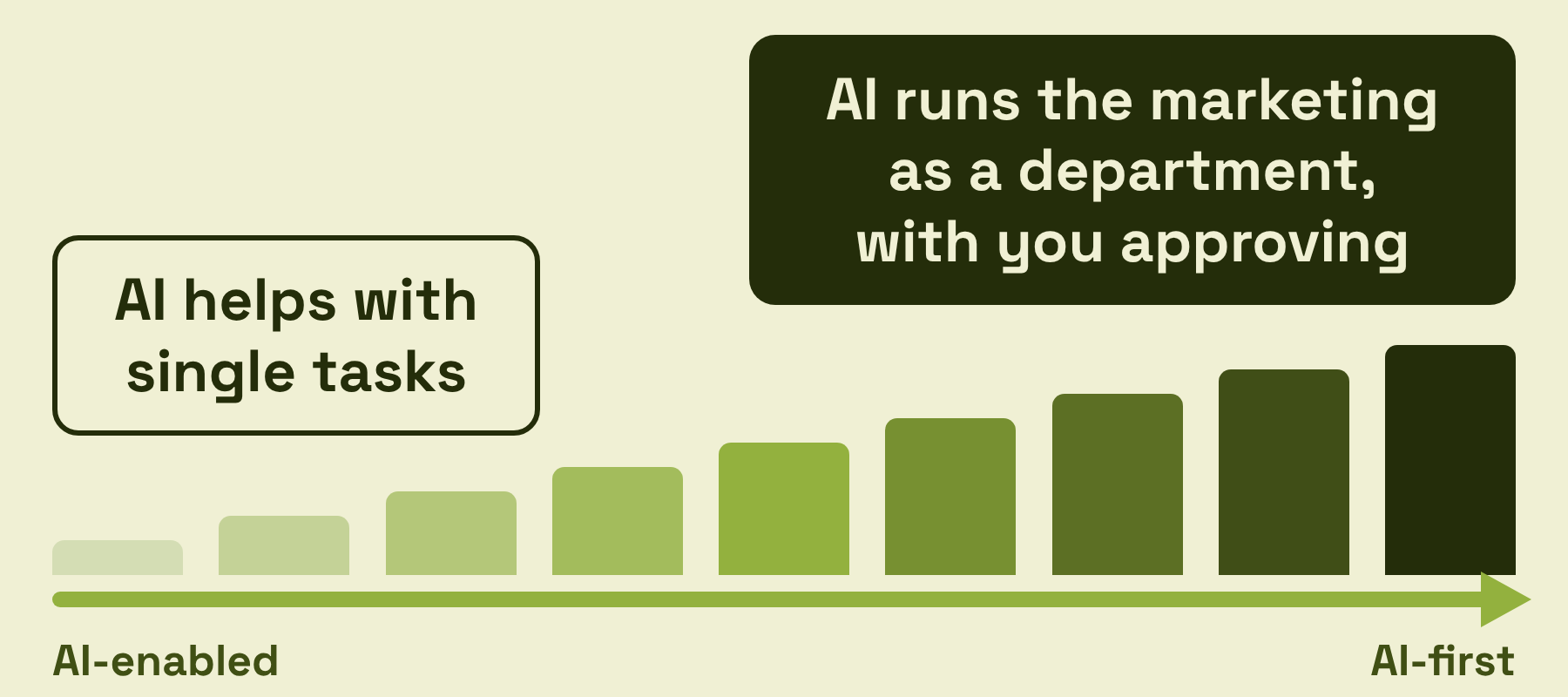
What is the difference between AI-enabled and AI-first?
The World Economic Forum's work with Kearney on AI-first operating systems sorts enterprises into three types: AI-enabled, AI-first and AI-native. This assessment uses the first two, the ones that fit an established brand's marketing. AI-enabled means AI applied task by task inside the old way of working. AI-first means the work is redesigned so AI is how it actually gets done, with clear rules for what AI handles and what people keep.
The report gives each of its three types a test. Two of them apply here. Ask them about your own marketing:
- "If the AI tools were removed, would your workflows and organization structure collapse? If the answer is “no,” your enterprise is AI-enabled"
- "If AI systems were removed, could your business still operate (workflows, decisions, and delivery)? If the answer is “no,” your enterprise is AI-first"
Making AI how the work actually gets done means redesigning the work, with clear rules for what AI handles and what people keep. That redesign, for marketing, is what an AI operating system for marketing is.
The question at the top of this page is DLaurie AI's wording. "Running on a complete system" and "simply" are not the report's words.
Source: World Economic Forum with Kearney, The AI-First Operating System: A Blueprint for Operating and Business Model Innovation, white paper, June 2026, Table 1, “Enterprise archetypes by AI adoption,” column “Litmus test.” https://reports.weforum.org/docs/WEF_The_AI_First_Operating_System_A_Blueprint_for_Operating_and_Business_Model_Innovation_2026.pdf
What does the AI Marketing Assessment measure?
If you already use ChatGPT or Claude every week for campaign briefs, ad angles and weekly rollups, this assessment asks a different question: when you step away, what keeps the marketing moving? It measures nine areas, one for each of nine components of an AI operating system for marketing, and each question asks how your marketing handles what that component does.
How you ask for work
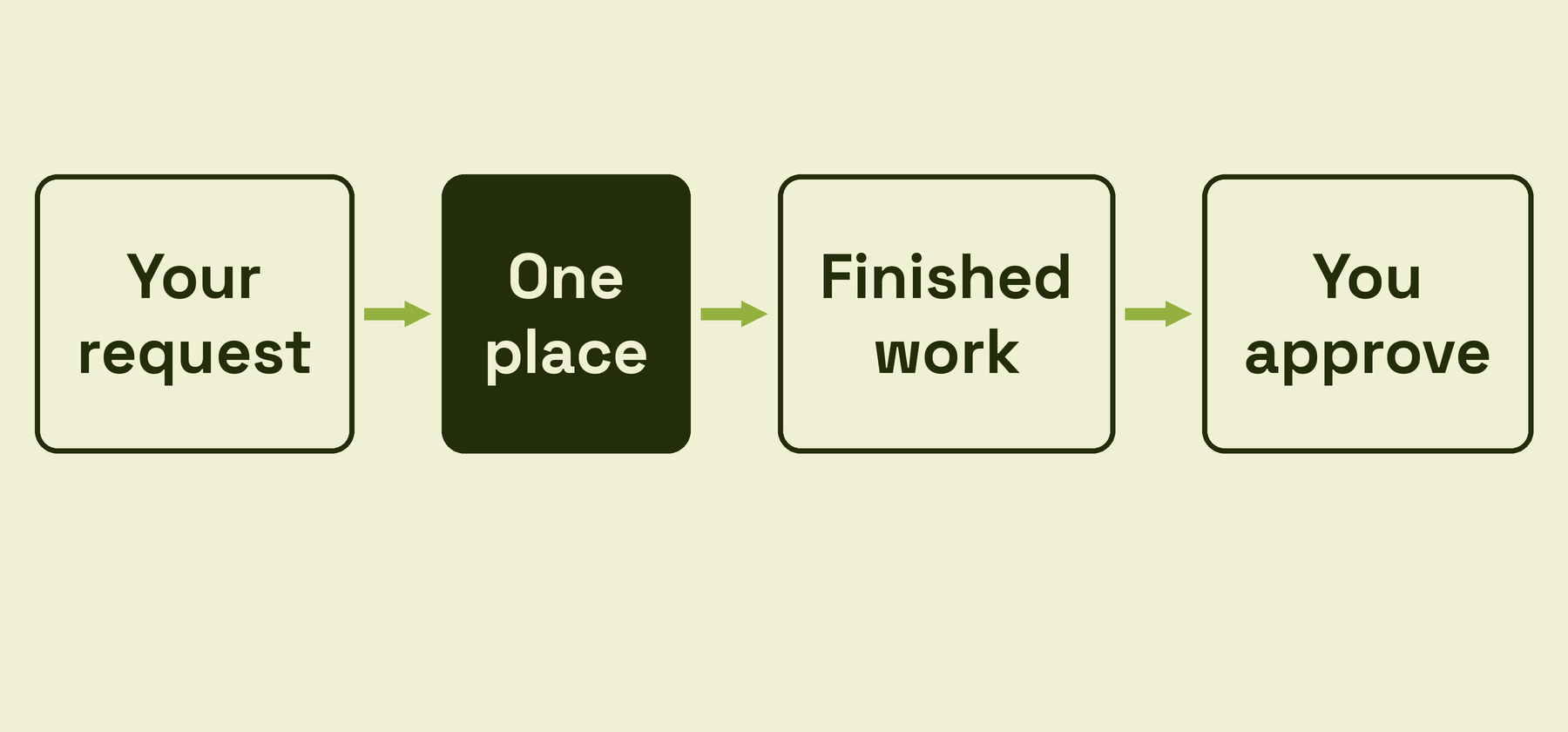
The interface is where you give direction: you ask for marketing work in plain words, and finished work comes back for you to approve, revise or reject. The question asks how you ask for work today, and whether the finished work comes back to one place.
Who routes the work
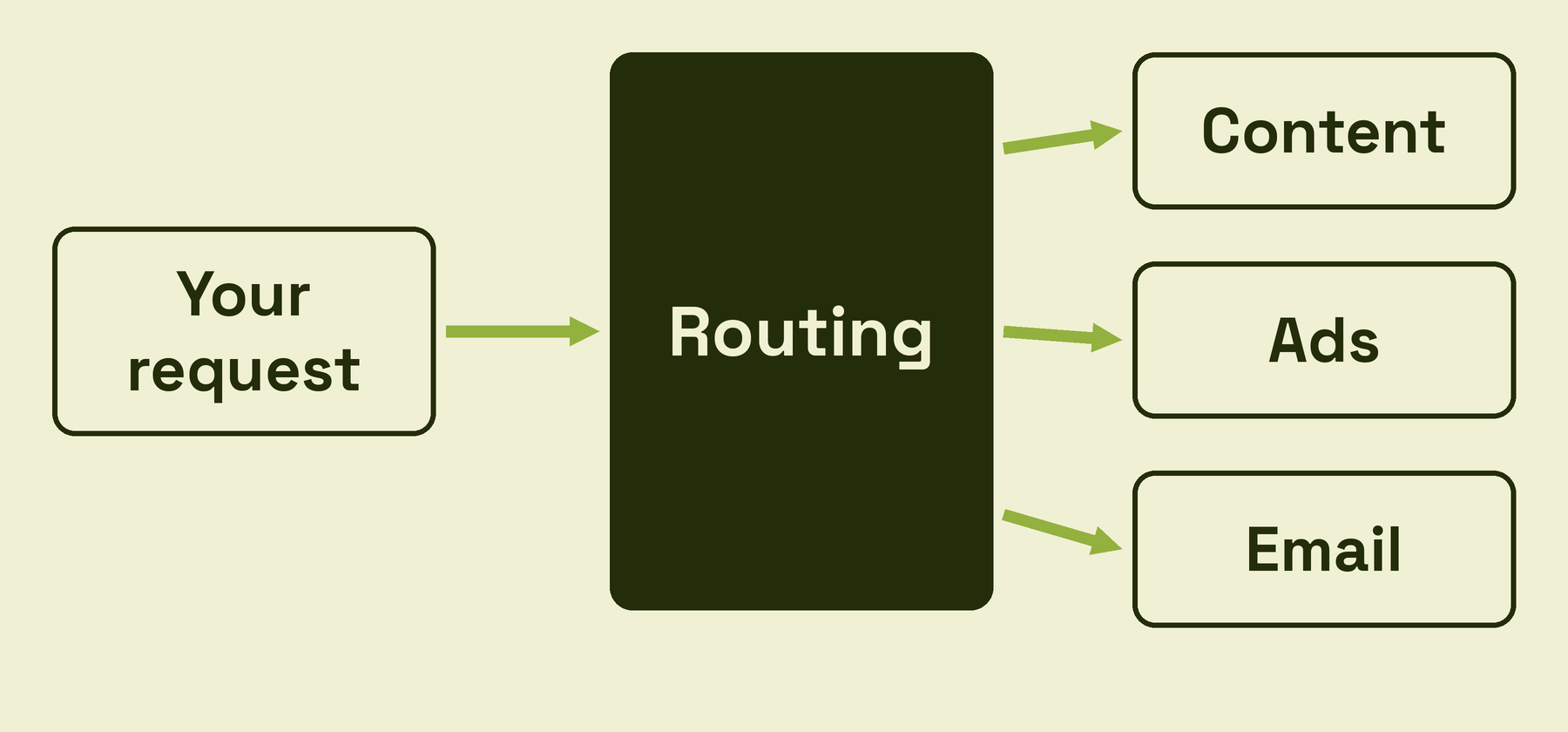
The AI CMO is one front door. It reads each request, briefs the right specialist and passes one specialist's work to the next, and it recommends while you decide. The question asks what decides who handles a task and moves it to the next step, or whether every task goes through you.
AI agents, defined roles
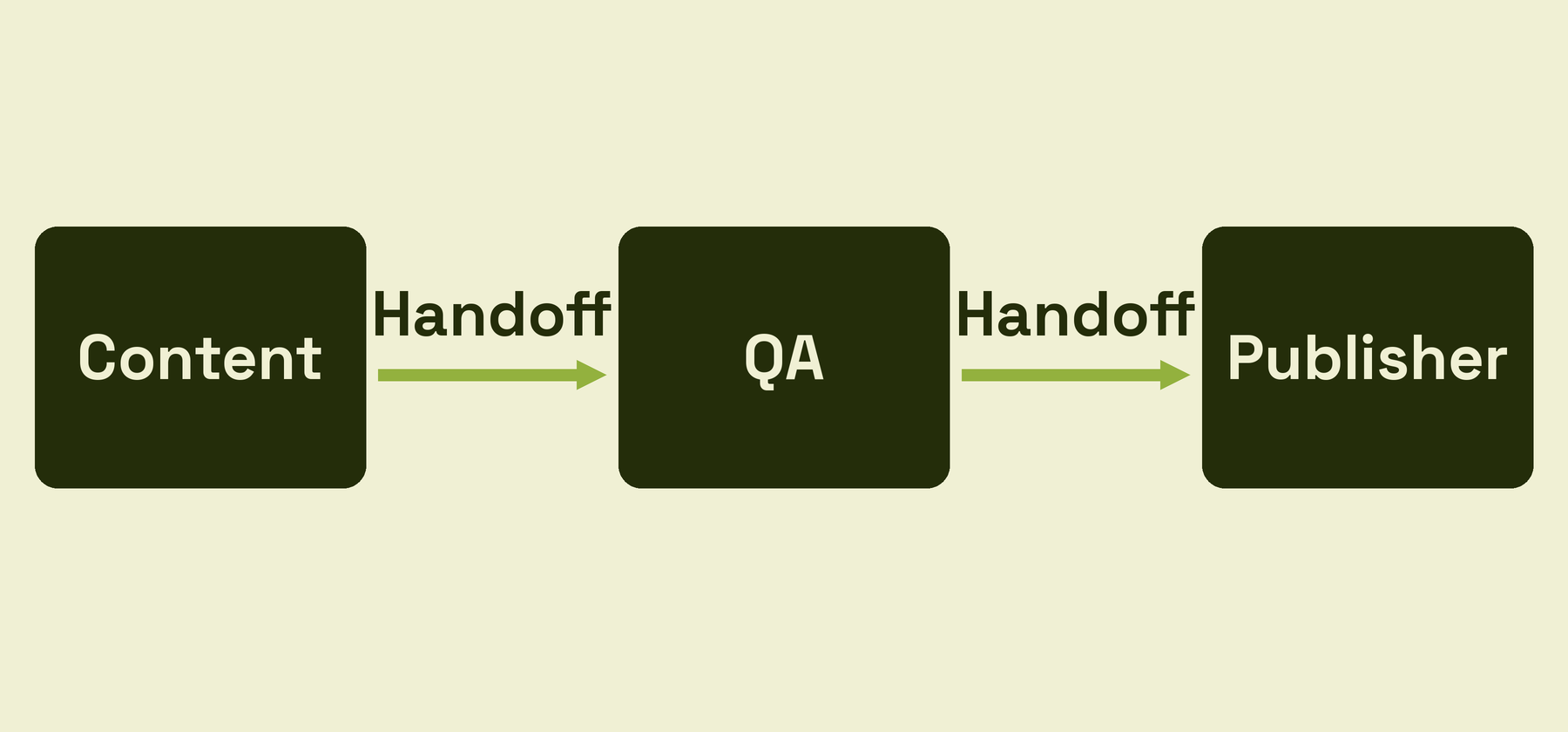
The specialists each own one job, with its own limits and a clear handoff, and all of them work from the same knowledge base. The question asks whether your AI helpers each have one job, clear limits and a handoff, or whether one chat window does everything.
The right model for the task
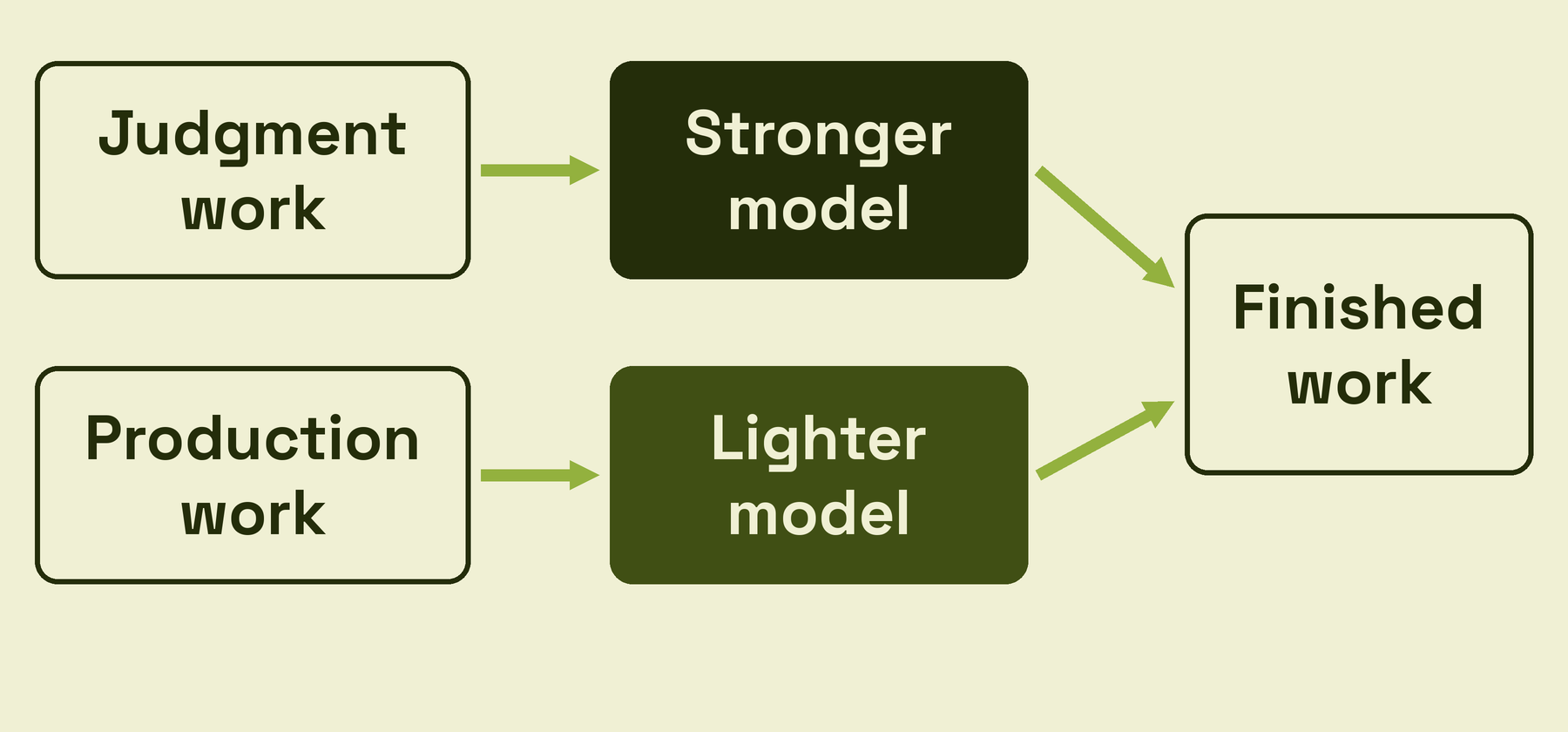
Stronger models suit strategy, research and review, and lighter, faster ones suit drafting and production. The question asks whether you use the right model for judgment work and for production, or the same one for everything.
Your brand's memory
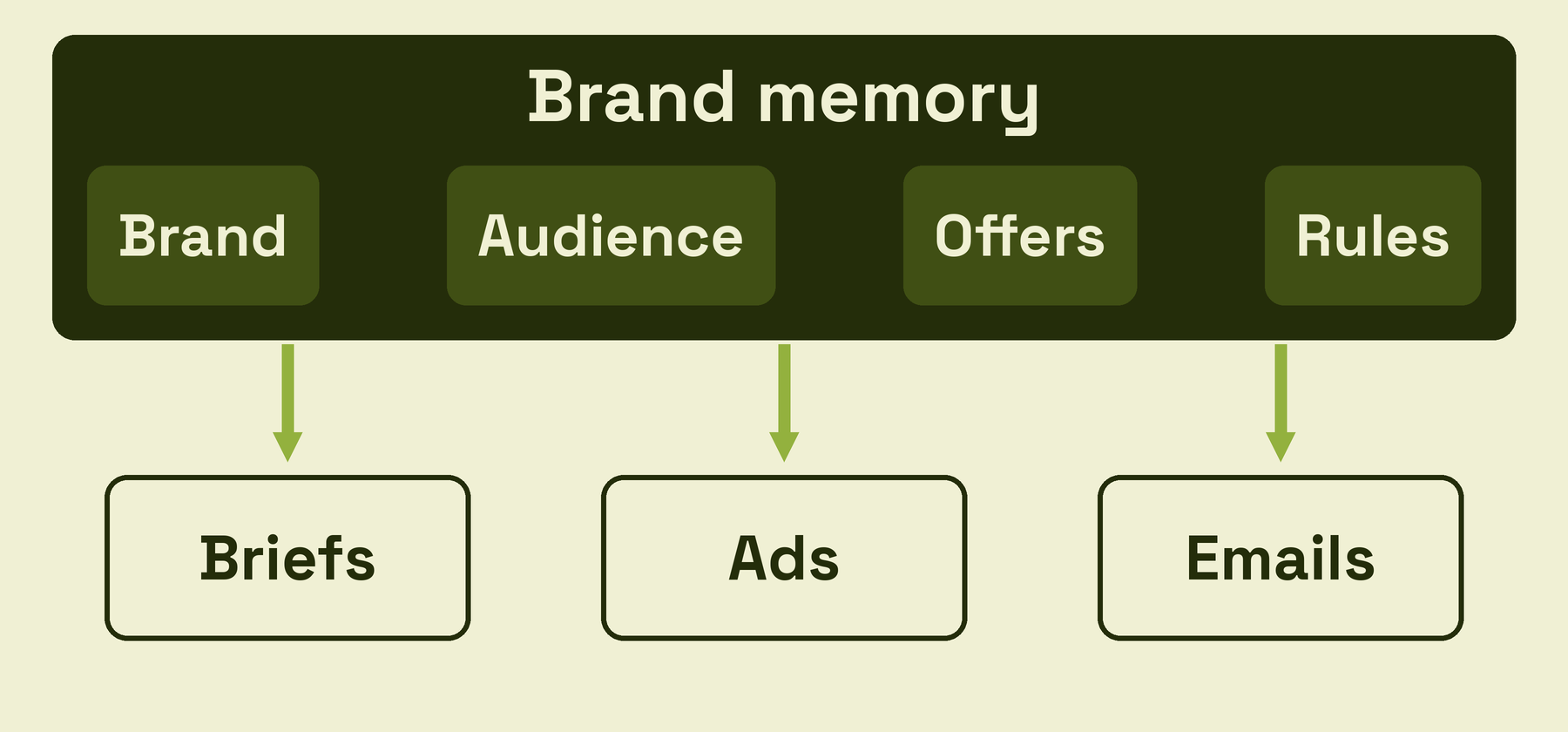
The knowledge base holds your positioning, voice, proof, audience, offers and rules in one organized place, so the brand is never explained again. The question asks whether AI starts from one record of your brand, or whether someone explains the brand every time.
Every task, every decision
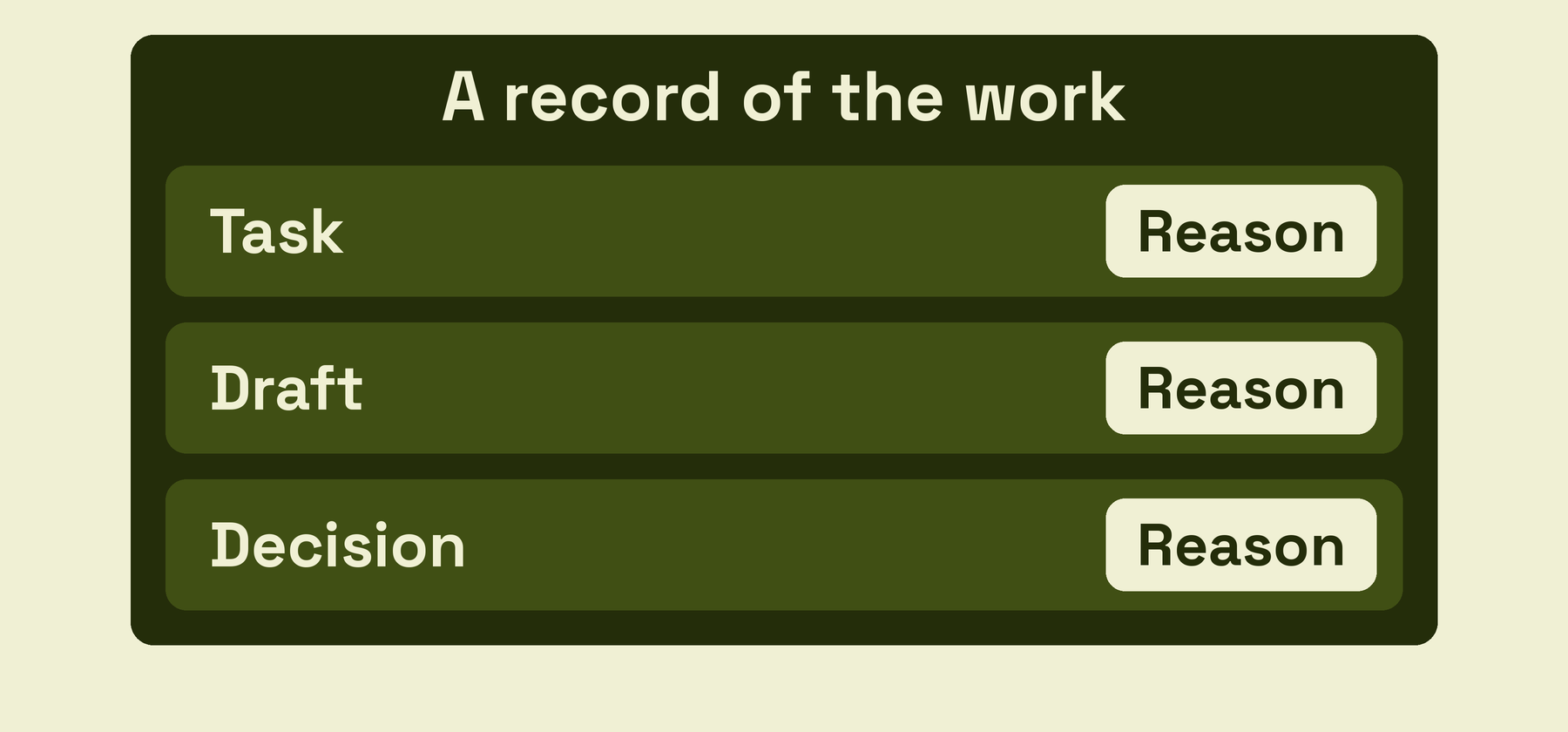
The record keeps every task, draft and decision with the reason you gave, so any output can be traced. The question asks whether you can see what went out and why.
The tools you already have
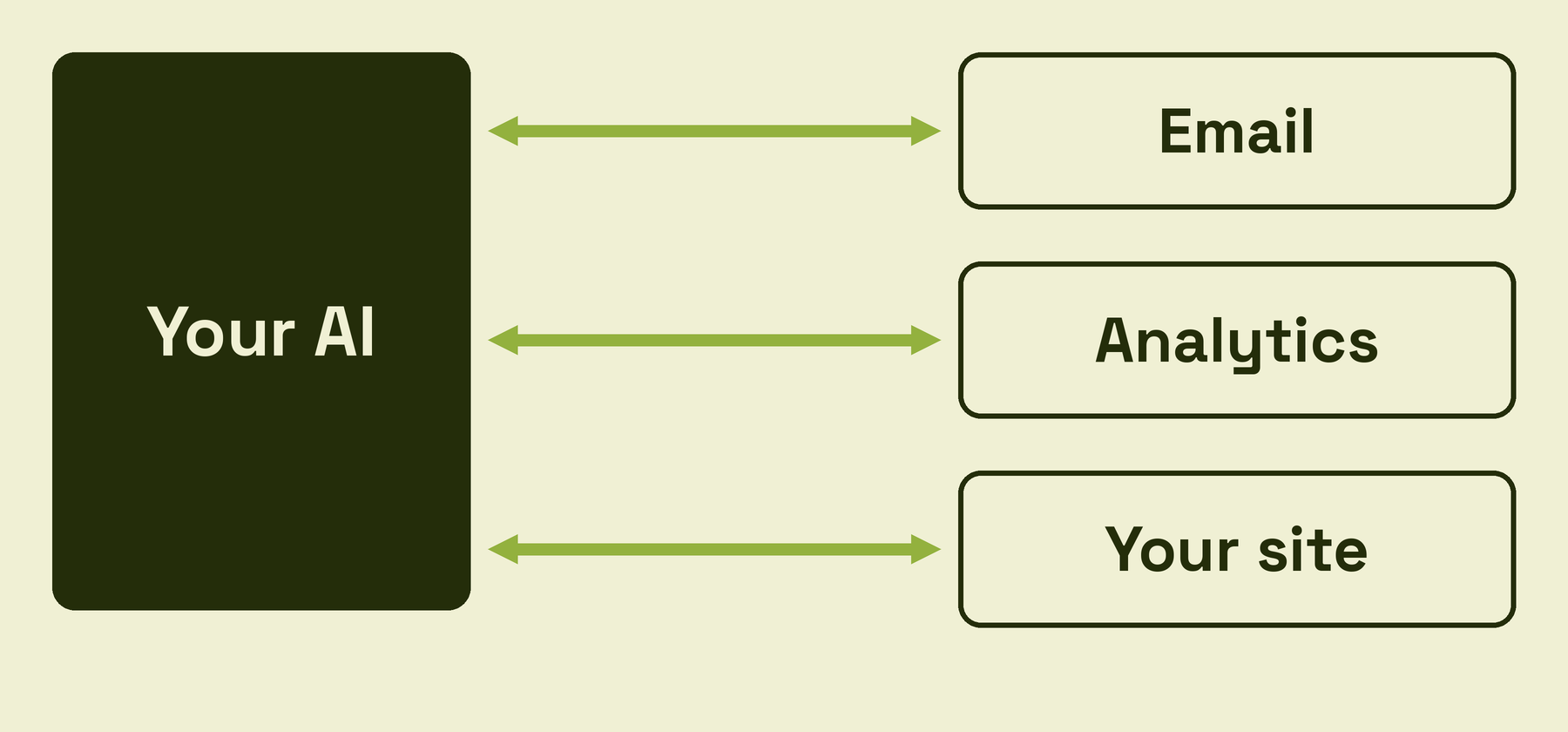
The connections let the system work through the tools your marketing already runs on, such as email, analytics and your site, which stay the source of truth. The question asks whether AI works from your real information in those platforms, or from whatever someone pastes into a chat.
Results and corrections
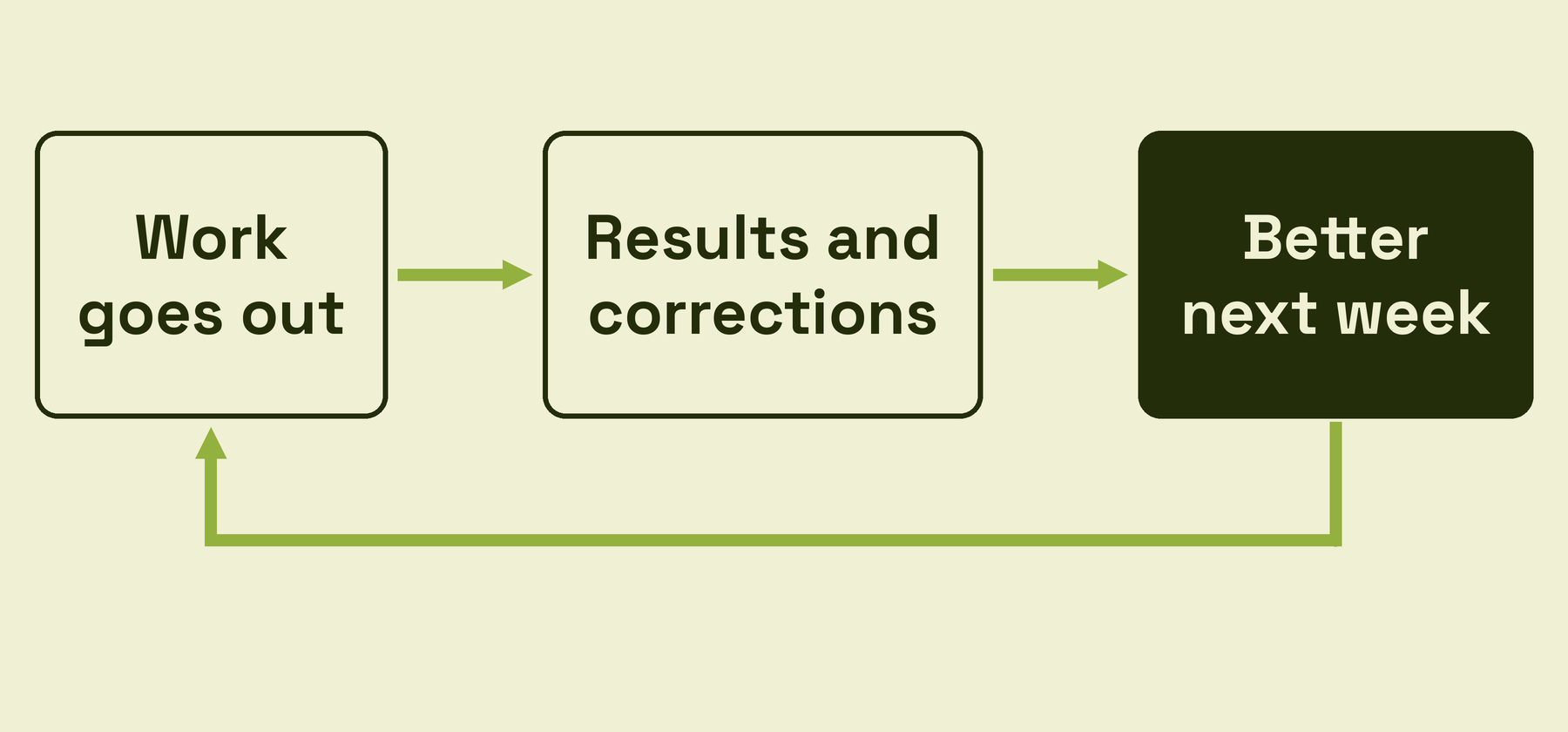
The learning engine brings results and your decisions back each week as proposed lessons, and you approve what changes. The question asks whether your results and corrections come back so next week's work is better, or whether the same fixes keep coming back.
Before you see the work
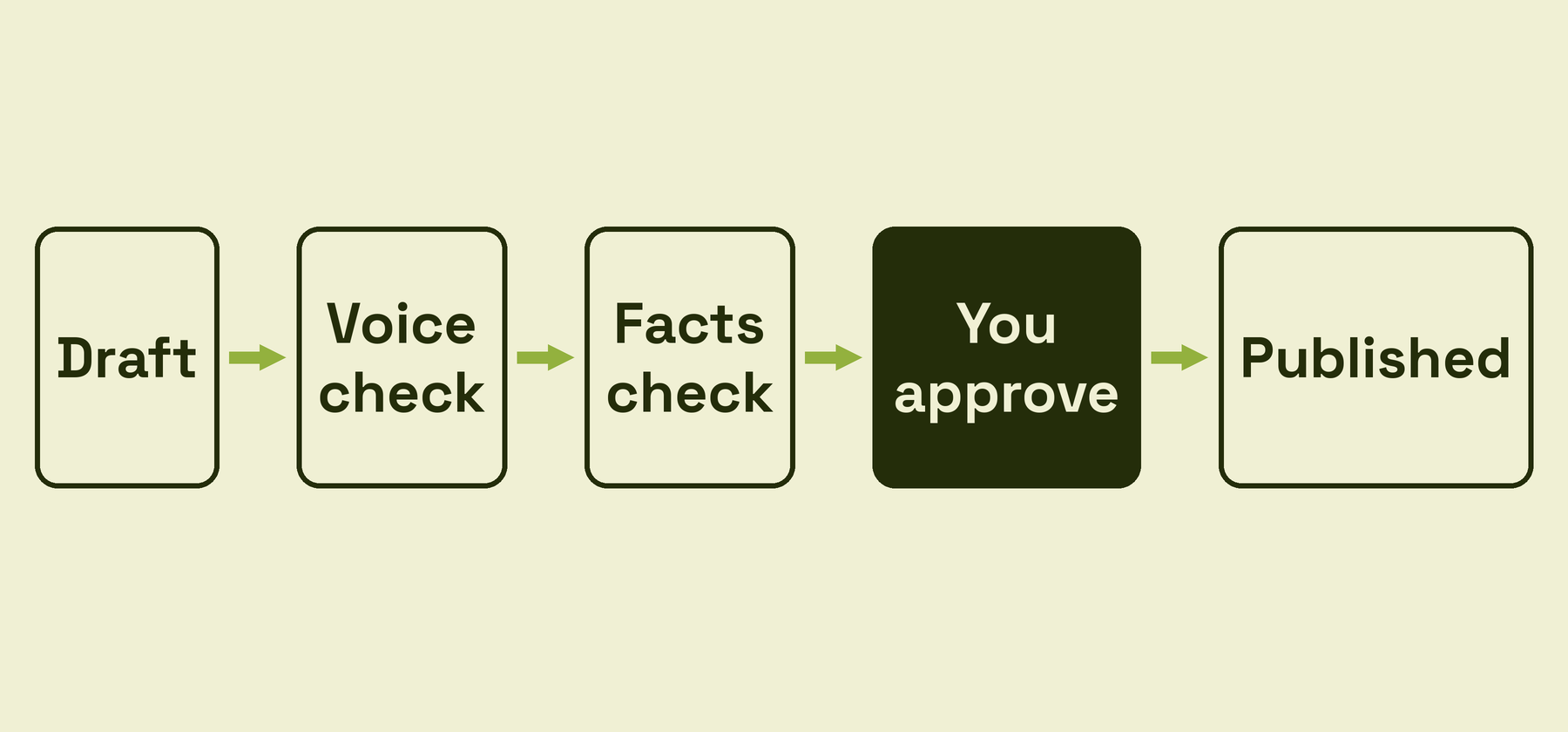
Quality checks run on every piece before you see it, for your voice and for facts with a real source, and nothing goes out without your approval. The question asks whether work is checked against your voice and your facts before it reaches you.
How does the assessment work?
You answer nine questions, one for each of nine components. Each question has three answer choices, written as where your marketing stands today. Choose the one closest to how it works this week.
Your result shows on screen as soon as you answer the ninth question. You do not give a name or an email to see it. If you want to do something with your result, the end of your result offers three choices, and all three are optional.
What does my result show?
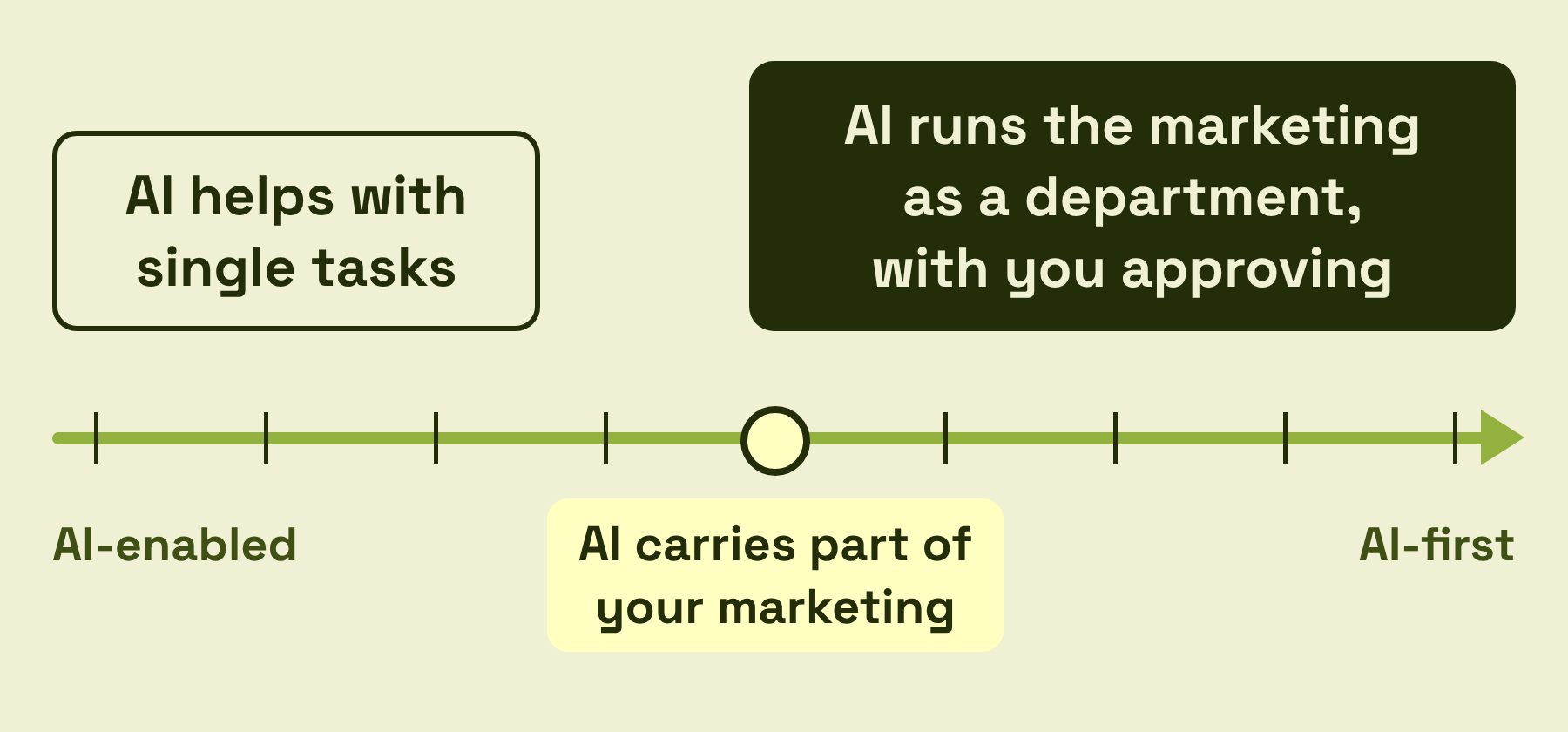
Two things. For each of the nine components, it shows where your brand stands today, what that component does in an AI operating system for marketing, and one plain next step. Overall, it shows where your brand sits on a range, from "AI helps with single tasks" to "AI runs the marketing as a department, with you approving." The first end is AI-enabled and the second is AI-first. The middle of the range is "AI carries part of your marketing." The result is a place on that range, not a pass or fail grade.
Why does a brand that uses AI every week still carry its marketing by hand?
Using AI and having AI carry the work are different things. 76% of the small business owners in Goldman Sachs' 10,000 Small Businesses program use AI, and 93% of those users say it has had a positive impact on their business. Only 14% say AI is fully embedded in their core operations, and 73% say they would benefit from additional access to training and implementation resources.
In practice the gap looks the same from brand to brand, and each part of it has an answer in the system:
- Every tool starts from zero, so you explain the brand again and again, and the output drifts off-voice. The knowledge base answers it.
- Nothing checks the work. Drafts go straight out, or someone rewrites everything. Quality checks answer it.
- Results never flow back, so the same mistakes repeat. The record and the learning engine answer it.
- It lives in one person's head. When they're busy, the system stops. The specialists, the knowledge base and the record answer it.
- Each new tool is one more thing to manage. The AI CMO, one front door, answers it.
Source: Goldman Sachs press release, March 17, 2026, https://www.goldmansachs.com/pressroom/press-releases/2026/small-businesses-embrace-ai-but-need-training-and-support-to-fully-harness-it. 1,256 participants in the 10,000 Small Businesses program, surveyed by Babson College and David Binder Research, January 27 to February 4, 2026.
Who is the assessment for?
Founders of DTC, ecommerce, B2B and service brands that already use AI, such as ChatGPT or Claude, for single jobs like campaign briefs, ad angles and weekly rollups. It fits a founder who runs the marketing alone, a founder with one generalist employee, and the operator or partner who shares the marketing with a founder. It asks nothing about the size of your business.
What can I do after I get my result?
The end of your result names the AI operating system for marketing and offers three choices. Each one is optional, and you can pick more than one.
An AI operating system for marketing, built on Claude as its brain, runs your marketing as a department. AI does the execution. You keep the judgment.
Book the 30 Minute Discovery Call.
Pick a time on Calendly. On the call, Denika looks at what your brand is doing today, what it needs and how it would be built.
Book the 30 Minute Discovery CallContact me about setting this up.
Not ready to pick a time? Send your details, and a question if you have one. Denika Laurie, Founder, will reply personally, the same or the next business day. The call is there if you want it.
Email me my results.
Optional. After you take the assessment, the end of your result lets you have your nine results emailed to you, followed by a short series of emails, one component at a time. By submitting your email you agree to receive communications from DLaurie AI. Our privacy policy explains how we use your information.
Frequently asked questions
What is an AI readiness assessment for marketing?
An AI readiness assessment for marketing checks how ready a brand's marketing is to run on AI. The AI Marketing Assessment is written for brands that already use AI. Its nine questions follow the components of an AI operating system for marketing, and for each one it shows where you stand and gives one plain next step.
What is an AI maturity assessment?
An AI maturity assessment places an organization on a scale of how fully AI is built into the way it works. The AI Marketing Assessment does this for marketing, on a range from "AI helps with single tasks" to "AI runs the marketing as a department, with you approving." The first end is AI-enabled and the second is AI-first.
How do I know if my marketing is AI-first or AI-enabled?
The World Economic Forum's report gives each type a test: ask whether your workflows would collapse without the AI tools, and whether your business could still operate without the AI systems. The AI Marketing Assessment places your marketing on that range from your answers to nine questions, one for each of nine components of an AI operating system for marketing, with your result on screen and no sign-up.
Do I need an AI operating system already to take it?
No. The assessment is for brands that use AI today, such as ChatGPT or Claude, and it does not expect a system to be in place. Your result shows how close your setup is to one.
Do I have to sign up to see my result?
No. Your result shows on screen as soon as you answer the ninth question, and no name or email is asked first. Having your results emailed, booking a call and asking to be contacted are all optional.
What are the nine questions about?
Nine questions, one for each of nine of the ten components of an AI operating system for marketing, in order: how you ask for work; who routes the work; AI agents, defined roles; the right model for the task; your brand's memory; every task, every decision; the tools you already have; results and corrections; before you see the work. Each question has three answer choices.
Why does the assessment skip the tenth component?
The tenth component is the partnership, and it is decided with you, task by task, not answered in a multiple-choice question. DLaurie AI puts it this way: "It's a partnership: for every task, we decide what you do, what AI does, and what you do together." Question 9 touches it: its strongest answer includes the rule that nothing goes out without your approval.
What happens to my information if I submit a form?
DLaurie AI uses your details to reply to you and to follow up by email, and by submitting your email you agree to receive communications from DLaurie AI. Your result is saved with your details so we can reply to you about it. You can opt out in any email. The privacy policy explains how information is used, including how to ask for it to be removed, and describes the analytics and advertising tools the site uses.
Take the assessment and see if your marketing is AI-enabled or AI-first
Is your marketing AI-first and running on a complete system, or is it simply AI-enabled? Nine questions, and your result shows on screen with no sign-up.